Sunday, April 28, 2013

Ranty Pants**

**Phrase courtesy of Michelle Roger, blogger at bobisdysautonomia.blogspot.com.au

This post is going to be a major departure from the previous few, so if you wanted to read something with rainbows and unicorns, I suggest you try elsewhere.

Yesterday morning, I had to be at work at 8:30, which meant leaving at 8. Due to a lack of driver's license, I needed to depend on my father to get me there. Like always, he was running late - one of my biggest pet peeves. I made my feelings about being late for work VERY clear, and was immediately met with - and I quote - "Well, maybe you should get your own car and stop bitching at me." The world stopped for a second. I responded, rather disdainfully, with "Well, I would, except I tend to pass out randomly without warning." Another adult member of the household implored me to "Let that go!"


Now. If you're a regular reader, you know there are a few things I won't tolerate. One of those things is ignorant, intolerant people marginalizing my very real, chronic, debilitating illness. I WILL NOT TOLERATE THAT KIND OF DISRESPECT. I did nothing to deserve any of that. First of all, my CARDIOLOGIST told me to wait to drive... BECAUSE I PASS OUT!!!!!!!!!!! Yes, while seated too! Also, in order to buy my own car, I'm going to need a more stable, permanent job than the one I have working for a local photographer on select Saturdays during April/ the beginning of May. I have no bloody clue as to WHY this is such a difficult concept to understand.

I am consistently amazed and horrified at the ignorance I experience on a seemingly daily basis in this house. Sorry, but you really don't just let something like Dysautonomia go. Where the hell have you been for the past 5 years? Have you had your heads under rocks? I thought that maybe - just MAYBE - all the doctor's appointments; pamphlets; tests; and my own personal, biologically accurate explanations of what is going on would help you to "get it." You should be able to handle the fact that I do indeed have a serious illness after dealing with my heart defect for 19 years. I also would have thought that my father, having worked in mental health for 18 years and now teaching high school biology would have a basic understanding of how the body works, and that Dysautonomia is a legitimate thing. But obviously not. I thought that we were capable of higher comprehension, or at least listening to those who are.

How do you live with people who seem to refuse to want to live with you? Sorry my piss-poor health is an inconvenience to YOU. Guess I missed the memo about how selfish it is to be sick, and how I can just "get over it" and "let it go" anytime I want to. I was not aware that one could willingly prevent their nervous system from being converted to scar tissue (because that is what's happening, according to Dysautonomia research). If it's affecting your life so negatively, maybe you should think about how it feels for me. How it feels to not be able to trust my own body. How it feels to not be able to drive. How it feels to know there's not much I can do about it. How it feels to not know when or if it will end. How it feels to live like this at the age of 18. Again, maybe I'm being selfish. I guess I just don't understand why you, my parents, of ALL people, still just don't get it.

Unfortunately, these displays of utter insensitivity occur regularly; not just in my home, but in many homes of chronically/ invisibly ill people. I do not know why the people who are supposed to act as caregivers for us refuse to believe us, but it happens. And I pity those people. I pity them for their limited scope of understanding and comprehension. I pity them for being "inconvenienced" at something that apparently, does not exist or is not legitimate. I pity them because they only perpetuate a problem that we, the chronically/ invisibly ill, deal with too frequently. Perhaps I'm being unfair. Maybe I take things too personally, although I'm not sure how I'm supposed to take being told to "let my illness go" like it's some sort of stupid, silly grudge. Whatever the case, I'm not gonna take it anymore.

Sydney


From the Dysautonomia/ chronic illness community at large... WE'RE NOT GONNA TAKE IT!!


**WARNING**: If you can't handle 100+ expletives, do not watch the following video. I'm including it because 1) This post wasn't very funny and I feel the need to make up for it, and 2) Hearing Michael Shannon read a horrifically crude, psychotic email from a deranged sorority president is wonderful. I feel that it mirrors my internal dialogue that occurs during verbal assaults from ignorant morons. Screaming, expletives, and all. So, if you can handle it and won't leave rude comments for me for posting it, proceed and enjoy :)


Thursday, April 25, 2013

Motivation


I've always struggled with weight problems. As a baby, toddler, and pre-schooler I was too small. After my third pacemaker procedure, it seemed like all the weight I couldn't gain was suddenly getting packed on - to an unhealthy point. Neither side of my family was blessed with great figures (save for a few relatives), and that is certainly evident in my household. The weight gain was so bad that my cardiologist had to address it at every appointment. I wouldn't have considered myself to be a couch potato, and we never really kept junk food in the house. Admittedly, I wasn't the most active child, but I went outside any romped around with other neighborhood kids almost every day. I finally reached my heaviest in the 7th grade, and had been bullied about my weight since kindergarten. I had enough. I was also developing my interest in cardiology as a career, and I became painfully aware of how unhealthy I really was. 

I started eating better - salads for lunch, plenty of fruits and veggies, only the occasional treat. My diet was based on restriction, NOT deprivation. There is a huge difference! I exercised more - ab work, walking one to two miles everyday, taking the stairs. I started to see about a pound less every week on the scale, and that was a truly awesome thing. My clothes got smaller, my performance in gym class increased as did my overall energy levels, the bullying decreased until - BAM - I was 52 pounds lighter and a freshman in high school! 

Unfortunately, POTS came into my life when I was in 8th grade. My symptoms didn't deter me from exercising at first, which allowed me to continue the weight loss into freshman year. It then became slowed as the dizzy spells and heart palpitations became more frequent and severe. However, I was finally at a healthy weight, and losing was no longer a priority. But I kept losing it! My pacemaker doctor was actually concerned about it, and I realize now that lack of appetite and tachycardia will do that to ya. Keep in mind, this was at my "old" hospital, where POTS doesn't exist and I was making all of it up for attention (or because I was looney, or whatever reason he wrote in my chart but didn't have the balls to say directly to my face). Now that I am receiving proper treatment, I have managed to gain some back (although I wouldn't mind if it stayed away). If you didn't know, POTS treatment typically includes sodium and fluid loading... This does not bode well for keeping a trim figure. In the past year, I have gained quite a few of those pounds back, which I am sure can be attributed to the simple bloating and water weight that would occur with such treatment. For the record, though, I still wear a medium ;)

BEFORE...                                                                                       


AND AFTER!!


So now I'm trying to get back into a healthier lifestyle. That's going to be tremendously more difficult with POTS, but these extra pounds are not ok anymore. They suck, and need to go. So to help me out (at least with the exercise part, because that is probably the most difficult with POTS), I've created some "motivational mantras." Feel free to use them for your own personal motivation if they apply to you, or adapt them into something more fitting for yourself.

1)
You have your own unique set of limitations. Do you know what they are?
Yes.
Are you going to respect them?
Yes. 
Are you going to do stupid crap and hurt yourself?
No(t intentionally).
Have you done it before?
Yes!
Is it going to be hard?
Hell yes!
Is it anything you can't handle?
NO.

2) *This was a Facebook status update I had made, but it still helps. Also, the picture below goes along*
"Whenever I feel like giving up in the middle of a workout, I just take a nice, hard look at my workout towel. I am reminded that I DID make it to adulthood with a congenital heart defect. I made it when so many don't. I am able to do things they couldn't, so I will do it for them. For my friends, my future patients, and the CHD community at large. #strength"


Alright, those were my "deep thoughts" for today, and I kinda wanted to share them with y'all. So, if you are in a similar boat, I hope this helps. If you are one of my readers who reads because you're a friend or family member, thanks for coming back! I really hope you genuinely like this blog and don't feel obligated simply because of our relationship. If you just stumbled across my blog, welcome! I love to see all kinds of different places on the sidebar, so invite your friends as well!

And remember: whatever your size or shape, you're beautiful!! PLEASE PLEASE PLEASE with cherries on top - before starting ANY fitness routine/ regimen, CHECK WITH YOUR PHYSICIAN!! Listen to your body, and do it because you want to be healthy, not to fit into a certain size or impress someone. If you need to impress the people in your group with a number... you may want to find some new friends. PSA done!

Now here's some Right Said Fred!

Sydney :)

Monday, April 22, 2013

Strange Things...


Yep. That pretty much sums it all up. Not the fact that I'm tired, because I practically live in a perpetual state of fatigue. What's strange is that most all of my symptoms have been kept at bay recently, save for chest pain ; slow, pounding heart rate; and a marked decrease in energy. Compared to what POTS/ Dysautonomia typically feels like, I seem to be semi-functional again. Except for the fact that I feel like I'm walking around with cotton in between my ears and like I've been binge drinking NyQuil. What's even stranger is that my optimism for my future has returned! I just got a call for an interview at a local Hallmark store, and I work for a photographer on Saturdays. I'm even allowing myself to think that maybe - just MAYBE - I'm starting to outgrow this ass of an illness. It can happen, and for now I'm allowing myself that little tidbit of hope. I also renewed my application to Shepherd University (was accepted last year but declined and attended James Madison University instead), and am remaining optimistic about my future career in medicine. :) Woohoo! 

Dysautonomia is strange. You've probably figured that out by now. I'm not sure if it's the sunnier weather, or my illness screwing around with the chemicals in my brain, increase in my ability to sleep at night, or the medications I'm on; but despite the crushing fatigue, shortness of breath after even the simplest of activities, and weird heart rhythms, I actually feel pretty happy most of the time (recently). I cannot describe to you how awful the fatigue that comes along with chronic illness is, but I'm pretty sure I should be grouchier than I feel. It's as if I haven't slept for days, was deprived of my coffee, studied for everyone's final exams, ran a marathon, had parts of my heart and brain excised, and have been playing around with kindergartners. That last one I actually have been doing, and I'm not exactly sure why I insist on doing that to myself. But nevertheless, I've been able to drag my butt out of bed, exercise, be a little productive on most days, and still manage to groove on. It's a miracle! 


My inner realist wants to rationalize and prepare myself for the next symptom flare, or patch of bad attitude. I've had a few periods of really great health and stellar attitude, but just when I allow myself some hope, Dysautonomia comes back around to remind me that it's not going anywhere anytime soon. But my inner child just wants to stick its tongue out and say a big "Eff you!" to the realist. I feel like crap, fine. How is that any different from how I normally feel? But I also feel genuinely happy, determined, and strong for once, and I'll be damned if anything is going to take that away from me sooner than necessary. I'll get my reality check when my symptoms come back. But until then, I'm going to smile like I just came from a Botox appointment! I will outgrow POTS. I will get my medical/ nursing degree. I will be OKAY. I mean really - there are people much worse off than myself who are making it in this world, so why shouldn't I? I will do this at my own pace. Screw societal norms. It's a strange illness, but being slightly off-kilter myself, I would have to say that POTS has met it's match - for now, anyway. 

And because Disney is always the answer, here's an appropriate track from "Toy Story": 


Cheers, 
Sydney ;)


Wednesday, April 17, 2013

And Now For Something Completely Different! Part 2

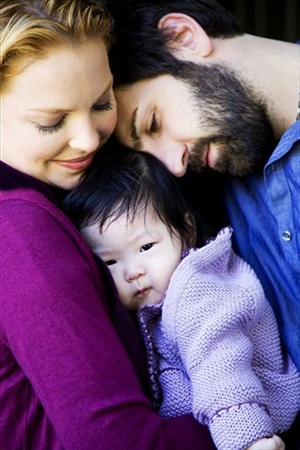
I wrote part one of this post as a sort of introduction to congenital heart defects and the topic I wanted to bring up about CHD in the media. Like I stated in the previous entry, most people never hear of congenital heart defects, and when they do, it's when their child is diagnosed. However, due to the increased awareness efforts of "heart families," we are seeing it being exposed more. This is wonderful! Unfortunately, the fats presented are not always accurate. Case in point: the lovely Katherine Heigl.

Heigl and her husband Josh Kelley adopted a positively adorable baby girl from Korea in 2009, who they named Naleigh. She told Harper's Bazaar that "Her heart is 100 percent fine now. She has a scar, so she won't be wearing bikinis, which is fine by us." (read the interview here)


Now, as a congenital heart defect survivor myself, I've got beefs with both of those sentences. First, Heigl's statement that Naleigh's heart is "100 percent fine" undoubtedly lead many readers to believe that Naleigh is "cured." This is NEVER the case with a congenital heart defect. There are over 40 types of heart defects, none of which have an identified and established cure. It's unfortunate, but true. However, cured or not, most people with a CHD do go on to lead normal, productive lives (read about that in the FAQs here). Her heart may be functioning at 100% now, but that does not mean there will never be any other issues or that she is cured. This may have been said out of a simple misunderstanding  or she may have just misspoken. My second problem is with Heigl's statement about Naleigh's scar. This one is particularly bothersome for me - I have THREE scars, and have no problem wearing a two-piece. That should be NALEIGH's decision, and no one else's! How vain can a mother be? We know Katherine Heigl is a beautiful, physically flawless actress who's entire career revolves around her appearance, but really? Is she going to keep Naleigh from wearing V-neck shirts and other articles of clothing which expose the upper chest? Has acting affected her definition of beauty that much? Those scars are something to be proud of, not hidden! We earned those "battle scars," and by George, we should be able to display them proudly if we so choose. 


I find that by showing my scar(s), many opportunities to raise awareness about congenital heart defects arise, as people will ask about them. I understand that many people are not comfortable with doing that, and to each his/ her own. Maybe Naleigh would be an excellent CHD advocate, but by being taught from an early age that those scars should be hidden, she may think that her scar is something to be ashamed of. 

That's really what's wrong with society today. Everyone is too focused on physical appearance, and not on character. People with congenital heart defects usually learn early on that looks mean very little in the grand scheme of things. After all, I think most of us would agree that it's better to be alive than to worry about a scar. In fact, I think heart scars add character! They have awesome and inspiring stories, and pretty much always help you win in scar contests (the face on the boys' faces are priceless when a girl beats them!). So, I will leave you with the ideal that looks alone rarely take you far in life - it's what's inside that counts. And if that was too cliche for you, just ponder the picture below of some Camp Odayin kids who aren't too proud to show their scars. A picture really is worth a thousand words. 


Be kind to yourself.

Sydney :)


Monday, April 15, 2013

And Now For Something Completely Different! Part One


Who doesn't like the cross-dressing, chaotic, wonderfully random, and completely off-the-mark world of Monty Python? I haven't met anyone who openly admitted to NOT being a fan of Monty Python, and rightly so. However, I won't be discussing this lovely media phenomenon any further. Instead, I will be switching from my normal POTS-related posts to something completely different - congenital heart defects! To begin the post, I will start with some FAQs that will give you some background on congenital heart defect facts.

Q: Congenital Heart Defects? What the heck are those? 
A: Congenital Heart Defects, or CHDs, are problems with the heart that are present at or before birth. Some can be detected before birth during prenatal tests, some are found at or shortly after birth in the hospital, some are found after the baby has gone home and becomes very sick. Others are not detected until later childhood, adolescence, or even adulthood. Unfortunately, there are some that are not detected until it is too late. 

Q: How come I've never heard of them? 
A: That's what the entire CHD population would like to know, as congenital heart defects are the MOST COMMON type of birth defect in every country. They affect approximately 1 out of every 100 babies in the United States, and there are currently over 2 million Americans alive today with a CHD. The first time many people learn of them is when their child is diagnosed. Many awareness projects are underway around the world right now. 

Q: So... is a CHD like, a hole in the heart?
A: Not always. "Holes in the heart" are called "Septal defects" are just one type of CHD. There are over 40 different types! They can range from mild and requiring no active treatment, to life-threatening and requiring surgical intervention within the first few days of life. Most of these defects are structural, meaning that they affect the physical structure of the heart and/ or blood vessels leading to and from the heart, but some of them are electrical, affecting the electrical pathways in the heart and the heart's rhythm. 

Q: What is the prognosis for someone born with a heart defect?
A: That all depends on the person, the defect, and any other underlying issues/ complications. Modern medicine has made it possible for most people to live long and productive lives; even those with more complex and severe defects. In fact, there are now more adults living with a CHD than children in the U.S., and there are several celebrities living successfully with heart defects: Shaun White, Brian Littrell, Max Page, Jessie J, and Bret Michaels to name a few. Sadly, many other celebrities have passed away due to an undetected CHD or complications (Kirk Urso, John Ritter, and John Glascock are just a few). However, about 50% of complex CHD survivors will have some sort of neurological or developmental disability. Congenital heart defects are about 3 times more common than ALL types of pediatric cancers combined, and are twice as deadly. 

Q: How does someone get a congenital heart defect?
A: A heart defect will usually occur during the first few weeks of pregnancy when the heart is forming, oftentimes before the mother knows she is pregnant. They are very different than the heart disease that we typically talk about in society - obesity and lack of exercise do not cause CHDs. Sometimes they can be caused by genetic or chromosomal defects (Down Syndrome in the fetus and Lupus in the mother, for example, can be associated with congenial heart defects). They may also be caused by environmental factors and maternal behaviors (drinking and smoking can cause birth defects, as can exposure to toxic chemicals and substances such as lead, mercury, and radiation). However, the cause of most CHDs is unknown. 

**These facts are available from the Children's Heart Foundation (here). This information is only intended to inform and educate, NOT to diagnose. If you are having troubling symptoms, see your medical doctor immediately. If you or someone you know are expecting, PLEASE ask for a heart screening for your baby! 

Part Two will be up soon! 


Sydney :)

Tuesday, April 9, 2013

"Well, You LOOK Great!"


UGH. If I could do ONE thing to ameliorate the social woes of the chronically ill population, I would eradicate THAT phrase! Those 4 words, or any variant thereof, are the bane of social interaction for many of us who suffer with a chronic/ invisible illness, particularly if you've been ill for a long period of time. It's also a favorite subject of many chronically ill bloggers. Why? That can be a bit tricky to explain to someone who isn't sick, but I will try my damnedest.

We, as the chronically/ invisibly ill community are fed up with that phrase. Most of the time, the people who say it mean well, but sometimes we are met by a skeptic - "Well, you LOOK good... why are you still saying you're "sick"?" THIS is why we hate hearing that. It sounds to us like you think that because we have an aesthetically pleasing appearance, there's no way we can feel as bad as we say we do. Unfortunately, that's the case for some people. I'm going to break this process down step-by-step so it's easier to understand:

1) Person not so intimately involved with the medical aspects of my illness approaches and asks: "How are you feeling?"
2) I typically answer with something like, "Oh, you know, I have good and bad days" or "I'm alright, but still having a hard time with symptoms."
3) They look me up and down and say, "Well, you look great!"

That's phase one of this process. It happens whenever I'm well enough to go to church, or really anywhere I'm forced to interact with people outside my immediate family or circle of close friends. Now, I know they mean well, but I'm still trying to think of what benefit they think this sentence gives to me. The next phase in this process can go one of two ways:

1) I say a forced "Thanks" through gritted teeth and leave, as an awkward silence envelops the immediate area; or,

2) Say, "Thanks, but I wish I felt as good as I look." This will generally lead into a lecture on my part about the autonomic nervous system; Dysautonomia; and how they can't see the nausea, wild swings in blood pressure or body temperature; the sudden and unexpected changes/ release of hormones (any and all of them), the arrhythmias, hypoxia (lack of blood flow to the brain), etc. They will then respond with a stuttered "I'm sorry, I had no idea" after picking their jaw up off the floor and leave, finally decently educated.

Usually, the second part can only be executed on a "good day," which unfortunately, isn't often. However, I have never received further skepticism after providing such a thorough explanation. Yes, I do my homework. It is in my interest not only as a patient, but also as a dedicated biology/ pre-medical student to learn the technicalities involved with Dysautonomia. And not just Dysautonomia; it is in my best interest to familiarize myself with many different illnesses that I may be confronted with as a medical student and professional.

I digress. I am now going to *attempt* to explain WHY "But you look so good" can be so hurtful.

- It can seem to us as though you are trying to say "Well, you LOOK good, so you can't possibly be sick." That, in itself is a hurtful thing.
- Looks can be deceiving: No, I don't usually look sick, and I certainly never look as bad as I feel. POTS generally won't affect my appearance, and when it does, you won't see it unless you live with me. The most you will see is my pasty face, purple extremities, and a blank, tired-looking stare. It's called an "invisible illness" for a good reason.
- The autonomic nervous system controls every body system. So when it gets damaged or becomes diseased, all hell can break loose - on the INSIDE. Unless you are a highly-skilled medical professional looking for pupil reactivity, cyanosis, or edema, the most you will notice from the outside is that we "just look tired." I suspect you'd look tired too if it took you three times the normal energy expenditure to simply stand up, and by doing so causing a cascade of complicated physiological reactions that literally makes your body work and feel as if you were running a marathon - ALL DAY. (See the graphic below for a visual representation of how the ANS as a whole controls the body.)

Many of us have encountered medical "professionals" on our quest for answers who use this exact approach: LOOKS. It is not uncommon for someone with POTS (or any other invisible illness) to be met with, "There's nothing wrong with you; you're just stressed out." This is BEYOND devastating to hear from a supposedly highly-educated physician who claims to want to help people. We leave their offices hurt, confused, and still searching for answers instead of helped and enlightened. When you say it, those feelings are conjured up again and we leave you the same way we left those physicians. 
- Many of us are women or teenage girls, so we are often labeled as "stressed out," "emotional," or "anxious." When you dismiss us like the doctors, you are sending the same message. 
-Because a lot of us are females, we know how to use make up to look "less tired" and "less pasty." We can be vain creatures. At the same time, however, we don't want to worry you. Women are the nurturers, and we don't like to be the nurtured. It's just nature's way. Particularly here in the South, ladies are expected to "save face" and deal with their problems in a discreet and private manner. We are taught to "grin and bear it," if you will. 


(Normal ganglia vs.  Dysautonomic ganglia... No WONDER we feel like crap all the time! I think this is pretty powerful in explaining what Dysautonomia "looks" like. Source)  

So that's why "But you look great!" is such a hurtful thing to us. Like nails on a chalkboard. Again, we know most people mean well when they say this, and you probably wouldn't think of half of these reasons why it's so damaging. But now you know, and maybe will think about what you are actually saying to someone. Just my thoughts on a very touchy subject for the chronically ill population. ;)

Sydney


"Mama Said" by The Shirelles... because mama said there'd be days like this.


Friday, April 5, 2013

Keeping the Beat

(Where is the exit??)

Yesterday I had my first comprehensive pacemaker check at Johns Hopkins, and I do not regret leaving my old hospital for a second! While Baltimore itself is a little more difficult to navigate, being a patient here is far easier. Not once was I met with a confrontational, rude, or dismissive comment, and my new pacemaker doctor is even HAPPY to talk to me about POTS!! She is knowledgeable, compassionate, and works with my POTS doctor to make sure every aspect of my health is addressed. Even the staff are pleasant! When I asked a question, it was answered. No one told me that "POTS isn't a real thing," and no one chastised me for leaving school because of POTS; in fact, my reason for leaving was accepted and even sympathized with! Not that I'm searching for sympathy, but as a Dysautonomia/ POTS patient, this is an extremely rare thing to find at major medical facilities. And I wasn't even there for my POTS! I have found my "dream team"!

The view across from the Children's Hospital 

Part of the old Johns Hopkins Hospital

 Not sure how I feel about wearing a band that says "Corporate Security"...

The tastefully decorated interior of the new Charlotte R. Bloomberg Children's Hospital (there was also some sort of abstract ostrich opposite the fish/ chicken things)

I arrived super early to my appointment (as in a couple hours early), so I did all my paperwork then left to grab a snack and get some reading done. I went back to the Taussig Heart Center half an hour before my appointment, and as soon as I walked into the waiting room, I was met by choruses of "We've been waiting for you!" by the receptionists. I was shocked, as I was still half an hour early. I waited for the nurse to come get me, expressing many "I'm so sorry!"s all the while. The nurse, a very sweet woman, came and took me back for vitals and an EKG (electrocardiogram), which is the standard procedure at every congenital heart center. Then she escorted me to a small waiting area where I was to wait to be taken for an ECHO (echocardiogram). Now, I thought this was a little strange, as I had just had an ECHO in December with my POTS doctor. I thought that these results would have been shared with my pacemaker doctor, as we try to share as much as possible and my heart defect is electrical, not structural. Then she handed me my ECHO papers to take back with me. At the top of the paper was my last name, but a different first name. The physicians listed were also different. I promptly took it back to the nurse and come to find out, the desk had me confused with another patient! She had never shown up for her appointment, which is why everyone was so flustered when I walked back into the clinic half an hour early. There were actually 3 of us scheduled that day with the same last name! 

After that mess was cleared up, the pacemaker tech took me to my luxurious exam room and proceeded to conduct the pacemaker interrogation, sans ECHO. I still have about 4.5 years left on my battery (which is AWESOME, as I have had this current one for 10 years already!!! That's a MAJOR cause for celebration when it was only supposed to last 8 years, and the ones preceding it lasted 4! I need to plan a party!) and my leads (the wires that connect the pacemaker to my heart) still function wonderfully. I am still 100% dependent on the pacemaker in my ventricle, and have had a 5% increase in pacemaker dependency in my atrium (now 35% dependent). What that means is that the pacemaker does all the work for the bottom, pumping chamber of my heart (which is common in complete heart block), and the upper chamber can do most of the work on its own, but needs help 35% of the time. Then it was time to test the leads, which meant speeding up the pacemaker and slowing it down to see when the device captured and test what my heart can do on it's own. That part kind of sucks. Each lead must be tested, both the atrial and ventricular leads. We sped up the pacemaker to about 90 beats per minute (bpm) for a few seconds first for the atrial lead, then turned it off since the atrium can do work on its own. The same procedure was repeated to test the ventricular lead, only I was allowed to lay down for the second test. This time, she only turned it down into the 30s for a few seconds, and the lead captured twice!! Hooray! One capture would have been exciting, so we can safely say the wires work great. 

I finally got to see the doctor, whom I had met once before at my tilt table test to diagnose POTS. She. Is. AWESOME! I seriously love this woman. She explained that the tachycardia episodes that are common with POTS are mostly only occurring in the atrium, which is what I have wanted to know since I saw that I was having rates over 200 bpm. This makes sense because my atrium can essentially go as fast as it wants. We actually talked more about POTS than we did about the pacemaker. She suggested that I double the Florinef (the steroid that causes water and salt retention - oh joy) because I stopped taking the Midodrine (to increase my blood pressure). She also suggested that I wait a few more months before driving, since I passed out sitting in class about 6 months ago. She was very impressed with my knowledge of POTS and the treatments I'm on (medications and lifestyle modifications). She even said I would make a great biologist! I'm a nerd I know, but that is one of the best compliments I could ever receive. YAY!!!! **Grins like an idiot**

I go back to see my POTS doctor in June, and to check the pacemaker battery again. Oh, what fun. Finally we were on our way home! We stopped for coffee, but my gift card was 39 cents short. The only other thing I had on me was a 10-dollar bill, so the cashier paid the remainder for me. There are still some truly great people left in this world! It was definitely one of the better trips I've had for a doctor's appointment, despite my brain fog preventing me from remembering to ask at least 5-10 questions that I had meant to ask. My faith in the medical system has been restored, as has my ambition to work in it as a physician. All is right with the world. 

The Bionic Sydney :)